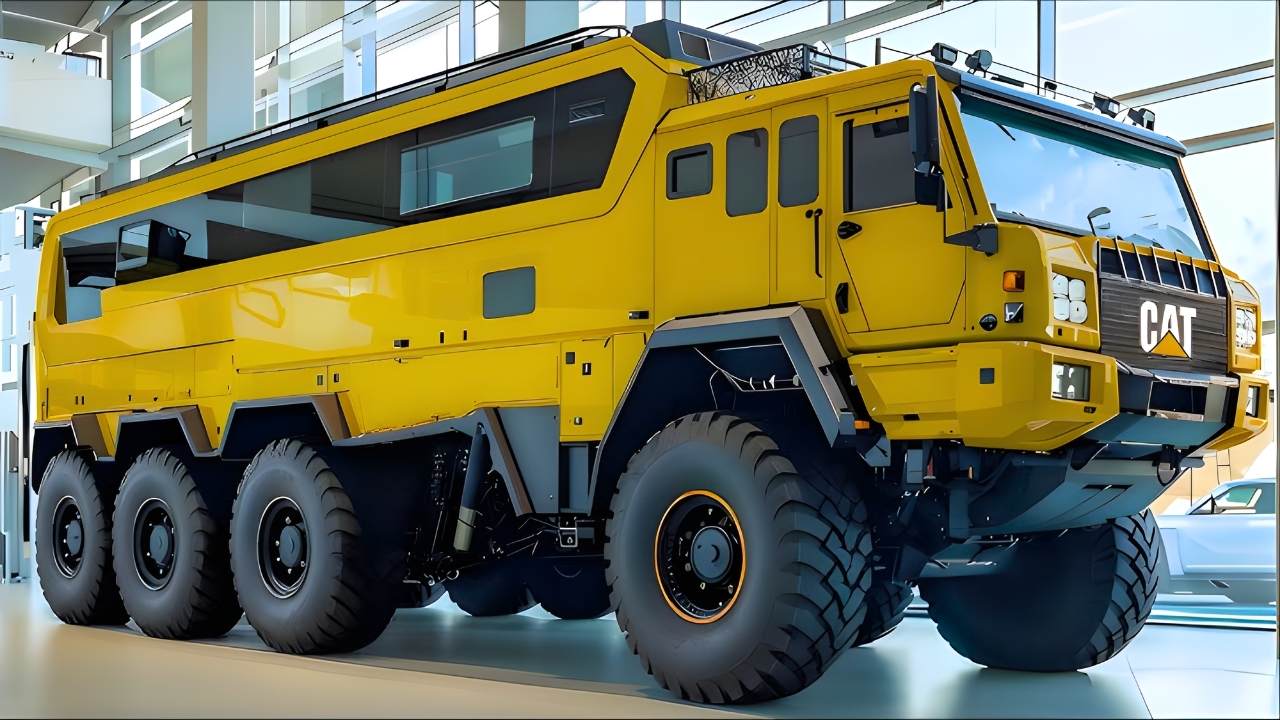
The 2026 Cat 8×8 Overland Motorhome stands out as an extreme expedition vehicle, combining heavy-equipment engineering with long-range off-grid living capability. It is designed for environments where conventional RVs cannot operate.
Widely circulated as a concept or custom overland build rather than an officially confirmed production model, the 2026 Cat 8×8 focuses on durability, self-sufficiency, and global exploration readiness.
Expedition Platform and Engineering Concept
The motorhome is built on an industrial-grade reinforced chassis with an 8×8 drivetrain, prioritizing durability and terrain adaptability.
This configuration allows power distribution across all wheels, ensuring stability and traction in extreme off-road conditions such as mud, sand, and rocky terrain.
Heavy Duty Diesel Powertrain and Output
The vehicle is typically imagined with a large turbo-diesel engine designed for torque rather than speed, with some estimates suggesting up to 700–850 hp depending on configuration.
Such setups ensure the motorhome can carry heavy loads while climbing steep inclines and maintaining performance in harsh environments.
Exterior Design and Rugged Construction
The exterior resembles a military expedition vehicle with a high ground clearance, reinforced bumpers, and oversized off-road tires.
Protective skid plates, modular storage compartments, and integrated lighting systems emphasize function and survivability over style.
Off Road Capability and Terrain Mastery
The 8×8 drivetrain, locking differentials, and multi-range gearing allow the vehicle to handle steep gradients, river crossings, and unstable surfaces.
Advanced suspension systems improve articulation and stability, making it suitable for extreme expedition routes.
Interior Layout and Long Term Living Space
Inside, the motorhome is designed as a fully functional living unit with a lounge, sleeping quarters, kitchen, and bathroom.
The layout supports long-duration travel with residential-style amenities and efficient use of space for comfort.
Material Quality and Durable Cabin Design
Interior materials are selected for durability, including reinforced panels, marine-grade upholstery, and insulated structures.
This ensures the cabin can withstand extreme climates while maintaining comfort for occupants.
Infotainment and Expedition Technology
A central digital system manages navigation, vehicle diagnostics, and onboard living functions.
Features such as off-road GPS mapping and satellite communication allow connectivity in remote areas.
Off Grid Energy and Self Sufficiency Systems
The motorhome includes solar panels, high-capacity batteries, and generator support for independent operation.
Water storage, filtration systems, and waste management solutions enable extended stays without external support.
Safety Systems and Survival Features
Safety features include reinforced structures, advanced braking systems, and terrain monitoring technology.
Additional systems such as emergency communication and environmental protection equipment enhance reliability in extreme conditions.
Driving Experience and Expedition Capability
The driving experience prioritizes control, torque delivery, and stability rather than speed.
High seating position and advanced terrain systems allow confident navigation in remote and unpredictable environments.
Practicality and Global Travel Utility
Designed as a mobile base camp, the motorhome supports activities such as exploration, research, and long-distance overlanding.
Its large storage capacity and modular design make it adaptable for various expedition needs.
Market Position and Concept Outlook
The 2026 Cat 8×8 Overland Motorhome occupies a niche segment of ultra-heavy-duty expedition vehicles.
It represents a blend of industrial engineering and luxury living, aimed at extreme travelers rather than traditional RV buyers.